All build services

Custom AI SystemsBuild the capability standard software cannot give you.

We design, build, deploy, and maintain custom AI products, client portals, agents, and controlled environments around a specific operational requirement. The work is for cases where standard software cannot fit the workflow, information, customer experience, integration, or control model that matters.

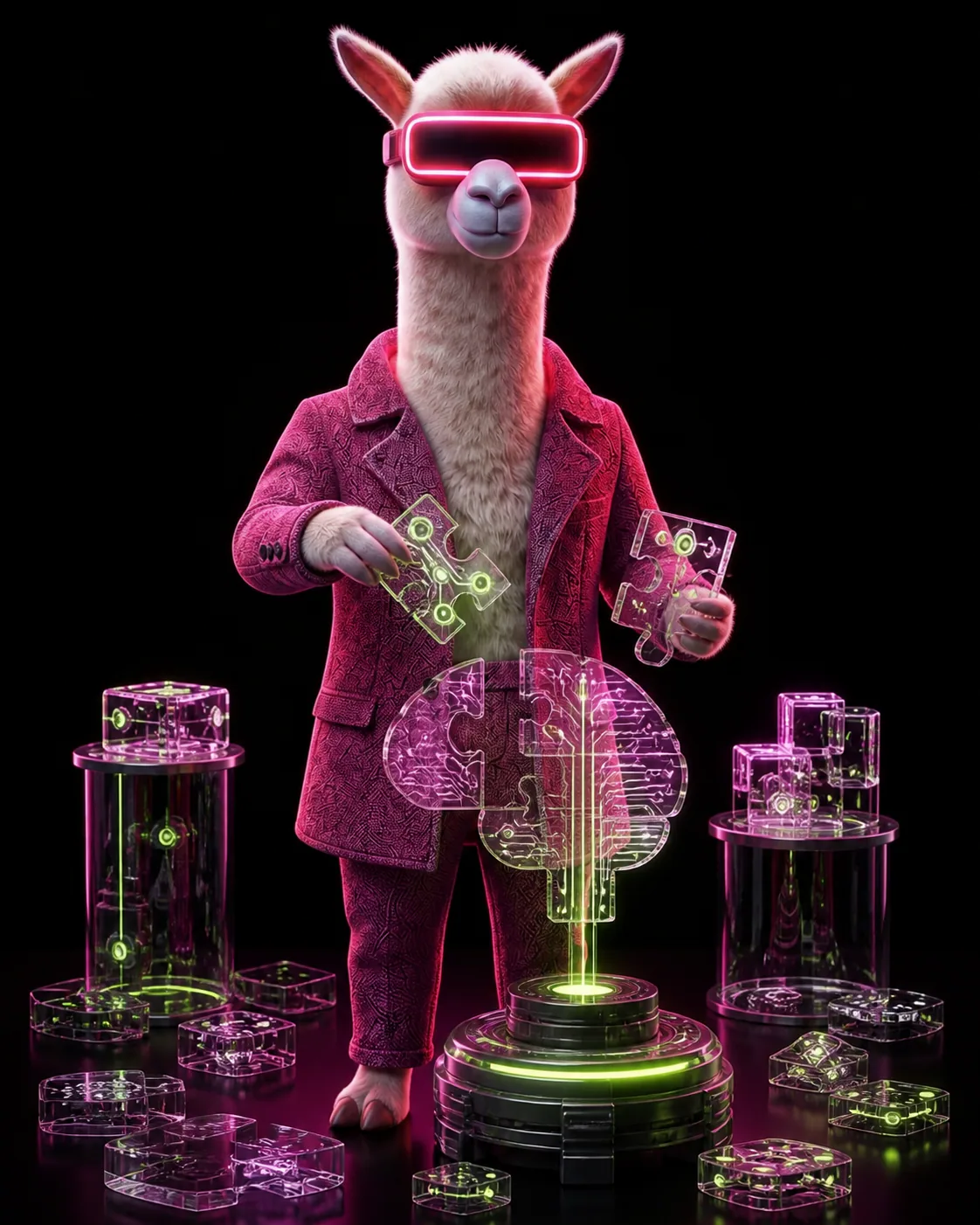
Smart Scale llama illustrating Custom AI Systems Build the capability standard software cannot give you.

This service may be a strong fit
if any of these feel familiar.

01

The operation cannot be bent around a standard tool

The workflow, customer experience, private knowledge, specialised data, integrations, or operating controls are specific enough that configuration alone would create workarounds or leave a material gap.

02

There is a clear job and owner, not only a technology idea

A custom build needs a valuable user outcome, named business owner, real users, constraints, and a practical way to test whether the capability improves the current situation.

03

The difficult assumptions can be tested before the full build

The work is well suited to a staged approach where data access, model behaviour, interface, integration, permissions, reliability, and user adoption are proven with representative evidence before scale.

04

A standard product may still be the better answer

If an existing platform already meets the core need safely, can integrate with the operation, and has a supportable ownership model, buying or configuring it may be more sensible than commissioning a custom system.

01

Software that fits

Design around the real operation instead of forcing another workaround.

02

One accountable build

Keep product, engineering, integration, AI, and governance connected.

03

A path beyond launch

Include ownership, monitoring, support, and improvement from the start.

BUILD · CUSTOM AI SYSTEMS represented by the Smart Scale characterONE SERVICE · 06 PART BUSINESS STORY
01 / 06THE BUSINESS SITUATION

Custom AI Systems
Build the capability standard software cannot give you.

You can explain the business need, but off-the-shelf tools cannot fit the workflow, information, customer experience, integration, or control requirements.

02 / 06WHAT SMART SCALE DOES

Create the capability
that standard software cannot provide.

We turn the business requirement into a testable product plan, prove the difficult assumptions, and engineer the complete capability across experience, software, AI, data, integrations, permissions, evaluation, deployment, monitoring, and support. Each system is shaped around the operation instead of forcing the operation around a generic tool.

03 / 06WORKSTREAM · 01

Shape and prove the requirement

Define users, value, workflow, data, systems, constraints, authority, and success evidence. Test the riskiest assumptions with representative examples before committing to a large build.

04 / 06WORKSTREAM · 02

Choose the right product boundary

Decide what belongs in deterministic software, approved data retrieval, models, agents, human review, and existing platforms. The boundary is designed around risk, maintainability, and the people who must operate the result.

05 / 06WORKSTREAM · 03

Engineer the complete product

Build the experience, software, AI, data, integrations, permissions, evaluation, and operational controls as one system. Production behaviour must be observable, recoverable, and owned.

06 / 06WORKSTREAM · 04

Launch and keep it useful

Prepare users, release through agreed checks, monitor quality and cost, support incidents, maintain dependencies, and improve the service as the business changes.

Questions specific to
Custom AI Systems.

When should we build custom AI instead of buying a standard tool?

Custom development makes sense when the workflow, customer experience, information, integrations, ownership, or control requirements are central to the value and standard software cannot meet them without material workarounds. A standard product is often the better answer when it covers the core job safely and can be operated well.

Do we need a complete specification before talking to you?

No. Bring the users, operating pressure, valuable outcome, constraints, and what existing tools cannot solve. We turn that into a testable requirement, identify the riskiest assumptions, and agree the evidence needed before committing to a large build.

What does the delivery path look like?

The work moves through discovery and product definition, an evidence-led proof of the difficult parts, engineering of the complete system, controlled release, and managed improvement or transition. A timetable is set once the required information, access, systems, decisions, and acceptance criteria are understood—not assumed before discovery.

Can the system connect with our existing software and data?

Yes, where appropriate interfaces, permissions, and data quality exist. Integration design covers success, failure, retries, identity, security, ownership, and what happens when a connected system is unavailable. We confirm exact connections rather than implying that every product can be connected in the same way.

Who owns the product and intellectual property?

Ownership, licences, third-party services, source-code access, environments, and ongoing responsibilities are defined in the proposal and agreement before development begins. Your business remains responsible for product decisions, data authority, and the use of the capability in its operation.

What risks are proved before a larger release?

We test the assumptions most likely to change the decision: user need, source quality, model behaviour, interface clarity, access, integration reliability, unsafe or unintended actions, human controls, operating cost, support, and recovery. A successful demonstration is not treated as proof that all production requirements are complete.

What happens after the first release?

We can provide monitoring, evaluation, incident support, cost control, improvements, new integrations, model or provider changes, and a transition plan. Success is evaluated through real task completion, quality, reliability, human effort, user adoption, risk, cost, and the business outcome agreed for the service.

Tell us what you want
this service to improve.

Discuss Custom AI Systems